
Article Directory
Generated Title: Is the American Economy Actually...Good? A Dose of Reality-Shifting Optimism
Okay, let's be real. For the past few months, it's felt like we've been collectively doom-scrolling through an economic apocalypse. Every headline screamed recession, every report hinted at disaster. But then, BAM! Nvidia drops a monster earnings report, Walmart crushes expectations, and the jobs report… well, it wasn't terrible. So, what gives? Is the American economy pulling off some kind of miraculous comeback? Or are we just seeing a mirage in the desert of bad news?
It's complicated, sure. But I think there's a deeper, more inspiring story here than just a simple "yes" or "no" answer.
Beyond the Murky Numbers
Let's start with the jobs report. Yeah, the headline number of 119,000 new jobs was decent, but as Heather Long at Navy Federal Credit Union pointed out, almost every number lately has been revised down. And Mark Zandi at Moody’s Analytics is still worried about the job market. So, is it time to break out the champagne? Probably not. But is it time to panic? Absolutely not!
See, here's what I think a lot of people are missing: We're in a period of transition, not collapse. The old rules don't apply anymore. The rise of AI, the shifting consumer habits, the… well, let's just say unique political climate – it's all creating a level of uncertainty we haven't seen in decades. It’s like we’re on the cusp of a new era, and the old maps just don’t work anymore.
And that brings me to the K-shaped economy. You've probably heard the term, but let's break it down—in simpler terms, it means some people are doing great (typically higher earners benefiting from the stock market and rising home values), while others are really struggling (lower-income households getting squeezed by inflation). It’s a tale of two Americas, and that divide is only getting wider.
But here's the thing: even in the midst of that divide, there are glimmers of hope. Walmart, for example, is seeing its fastest growth among customers earning over $100,000. Why? Because even wealthy people are looking for value. They're not necessarily cutting back on spending, but they're being smarter about it. They're demanding more for their money.
This, to me, signals a fundamental shift in consumer consciousness. We're moving away from mindless consumption and towards a more mindful, value-driven approach. And that's a good thing! It forces companies to innovate, to offer better products and services at more competitive prices. It's a catalyst for positive change.
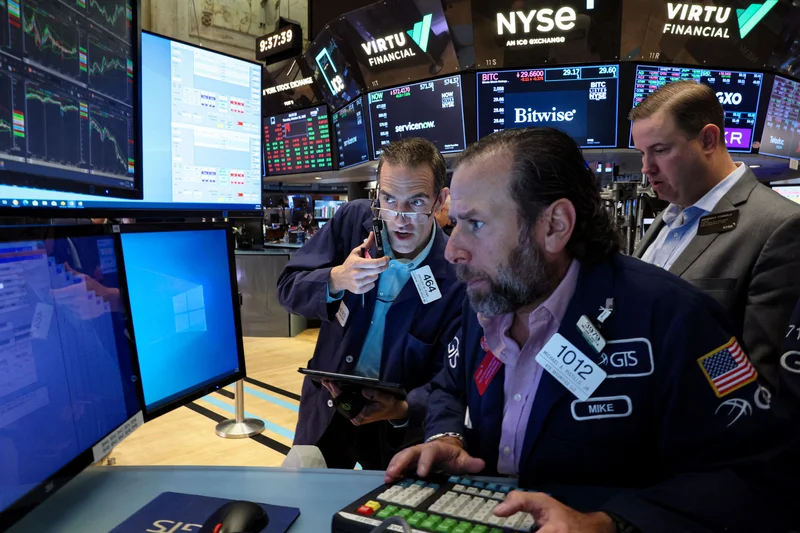
And then there's Nvidia. After Palantir's slightly disappointing forecast, everyone was ready to write off the AI boom as a bubble. But Nvidia came roaring back, proving that the demand for AI chips is not only real, but surging. And when I first saw the numbers, I honestly just sat back in my chair, speechless. Dow gives up 700-point gain, turns negative as Nvidia fizzles, rate-cut hopes dim: Live updates
Now, some might say the stock market isn't representative of the broader economy (and they wouldn't be entirely wrong). But it does influence sentiment. And after weeks of doom and gloom, Nvidia's earnings injected a much-needed dose of optimism into the market. It reminded everyone that the future is still being built, that innovation is still happening, and that there are still incredible opportunities out there.
Think about the printing press. When Gutenberg invented it, people were scared. They thought it would destroy the old ways of doing things (and in some ways, it did!). But it also democratized knowledge, sparked the Renaissance, and ultimately led to the modern world. AI is like that printing press—it's disruptive, yes, but it's also incredibly powerful. It has the potential to transform every aspect of our lives, from healthcare to education to entertainment.
Of course, with great power comes great responsibility. We need to make sure that AI is used for good, that it benefits everyone, not just a select few. We need to address the ethical concerns, the potential for bias, and the impact on jobs. But I believe that we can do it. I believe that we can harness the power of AI to create a better future for all of us. What if AI could cure diseases, solve climate change, and create a world of abundance?
The Trump administration is even floating new policies like lowering housing costs and sending stimulus checks. Are they controversial? Absolutely. But they're at least trying to address the pain that so many Americans are feeling.
The truth is, the American economy is a complex, messy, and often contradictory beast. It's not "good" in the sense that everyone is thriving. But it's also not "terrible" in the sense that we're all doomed. It's somewhere in between. It's a work in progress. And it's up to us to shape it into something better.
The Future is Still Being Written
So, is the American economy actually good? Maybe not yet. But it has the potential to be. And that's what I find so inspiring. We're at a crossroads, a moment of both peril and promise. The choices we make today will determine the kind of world we live in tomorrow. Let's choose wisely. Let's choose hope. Let's build a future where everyone has the opportunity to thrive.